A finished diamond is the record of a plan
Cutting is subtraction. Every gram removed is gone, and the sequence of removals is decided while the stone is still an opaque lump of carbon. What follows is how that decision is made and then carried out.
Stage 01
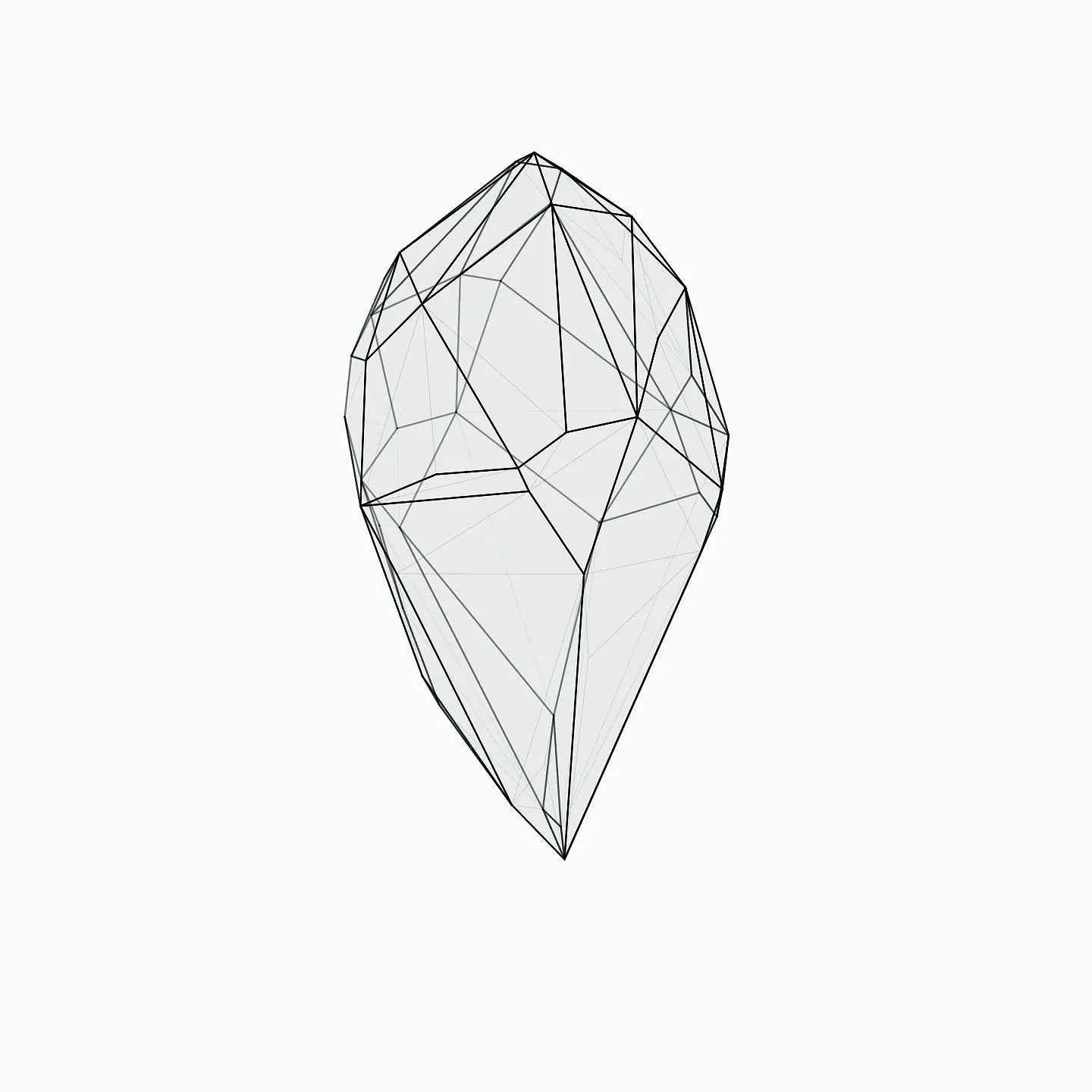
In the rough
A crystal as it left the ground. Nothing about the finished stone is decided yet — not the shape, not the weight, not whether it becomes one diamond or three.
Stage 02
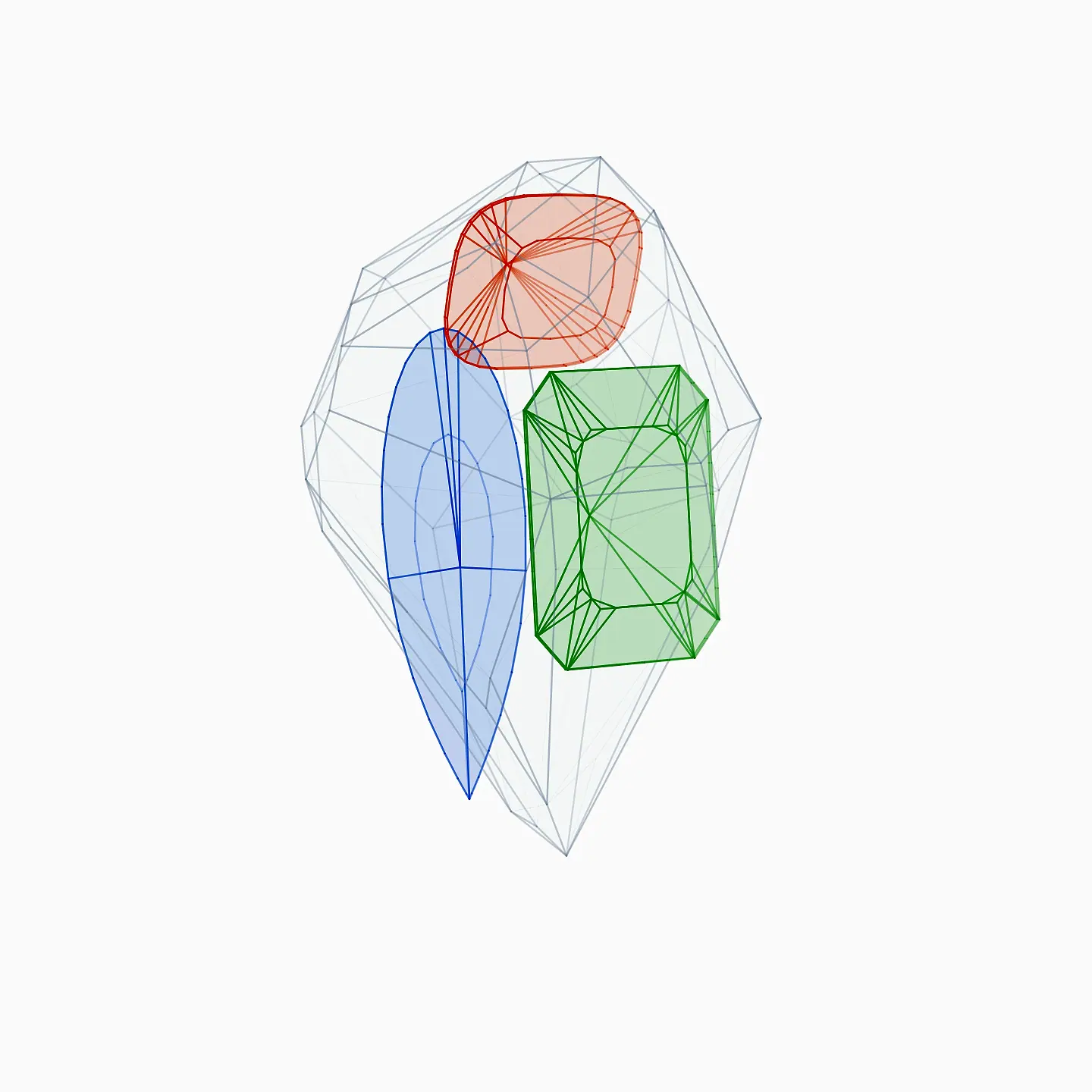
Reading the stone
The rough is scanned and mapped inclusion by inclusion. Every possible cut is modelled against the crystal, and one is chosen — the plan that trades the least weight for the most light.
Stage 03
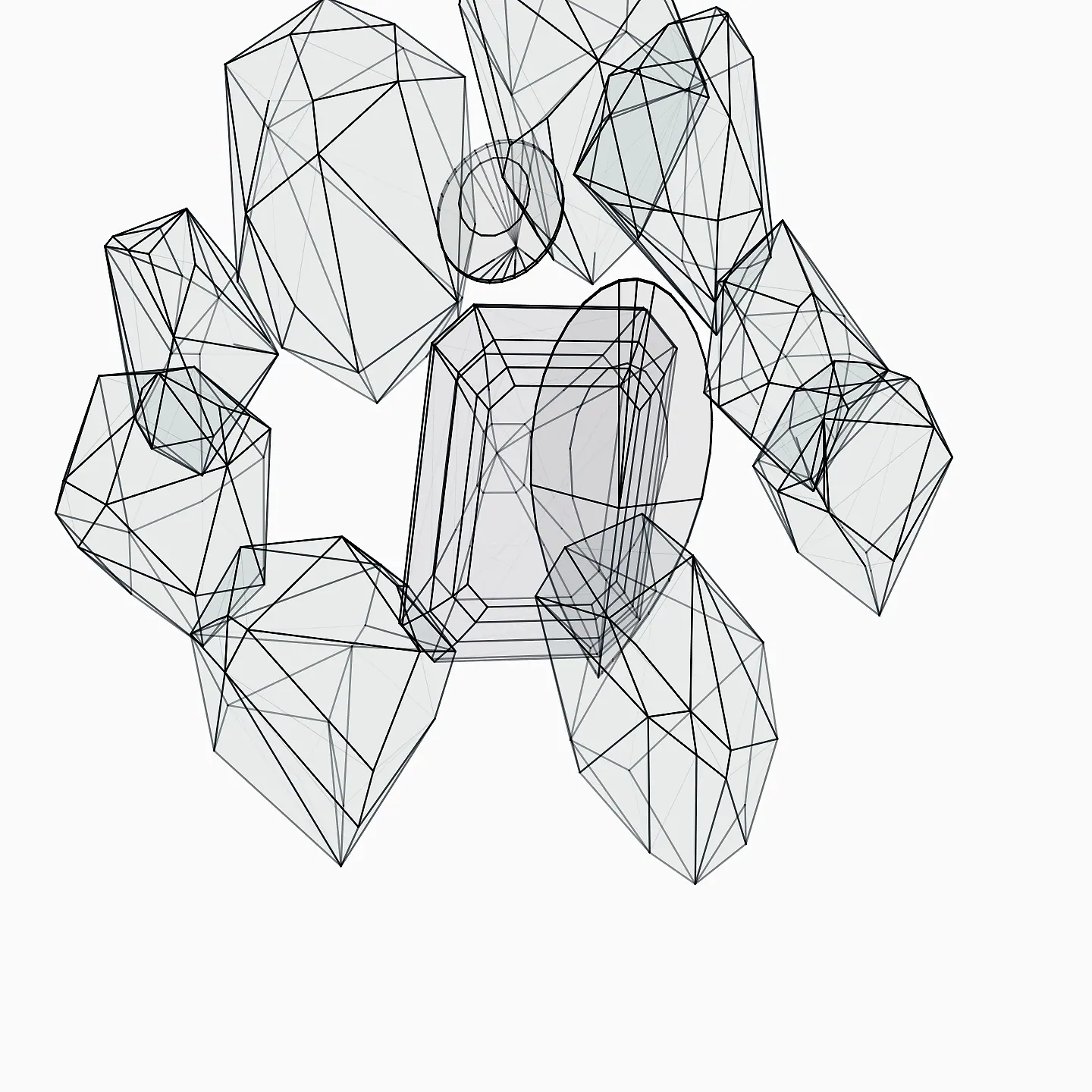
The first cut
The stone is opened along the planned line. This is the irreversible step: from here the outline is fixed, and the remaining work is a matter of degrees rather than decisions.
Stage 04
Facet by facet
Each facet is ground and polished to a set angle, checked, and returned to the wheel. Tolerances are measured in microns, because a fraction of a degree at the pavilion decides whether light comes back or passes through.
Stage 05
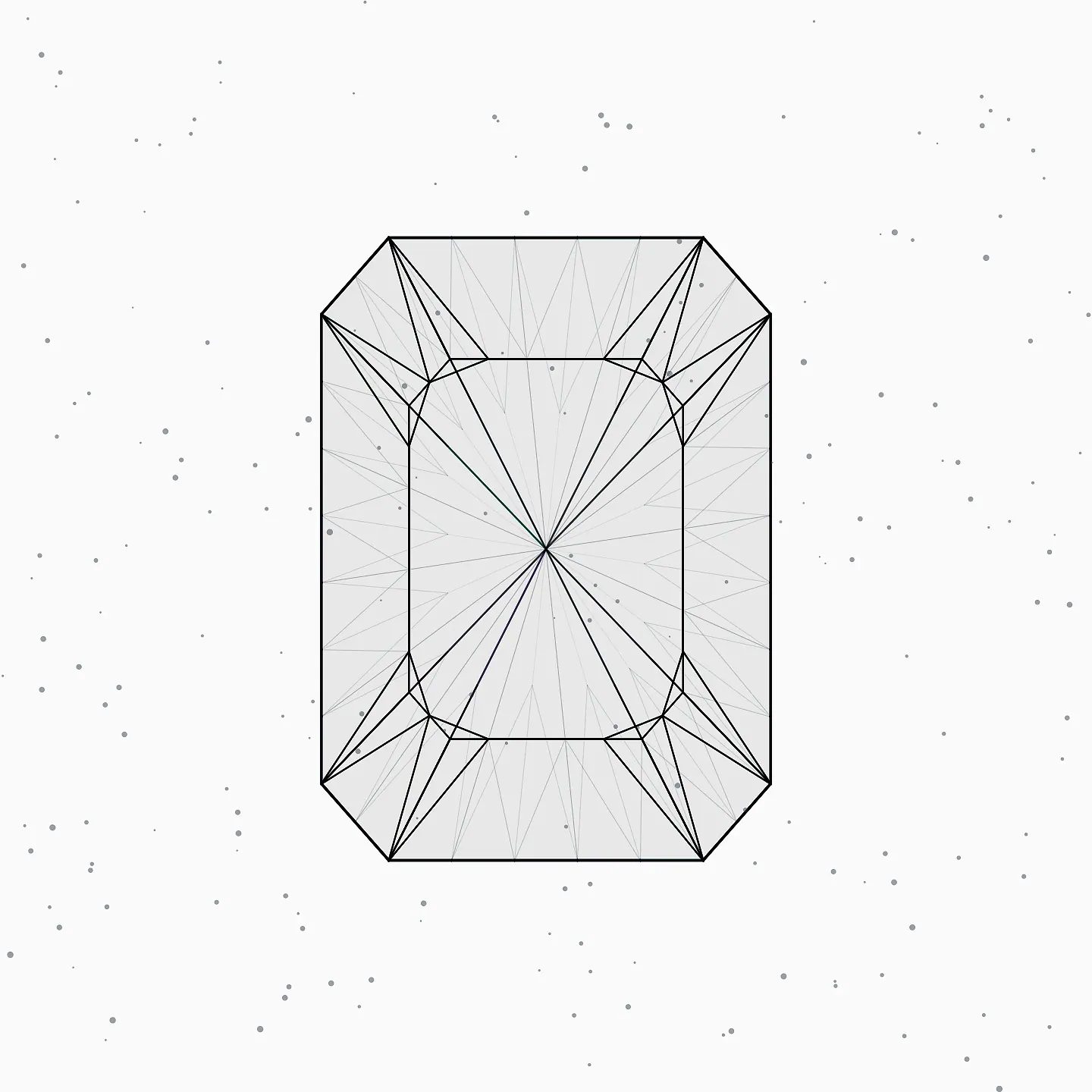
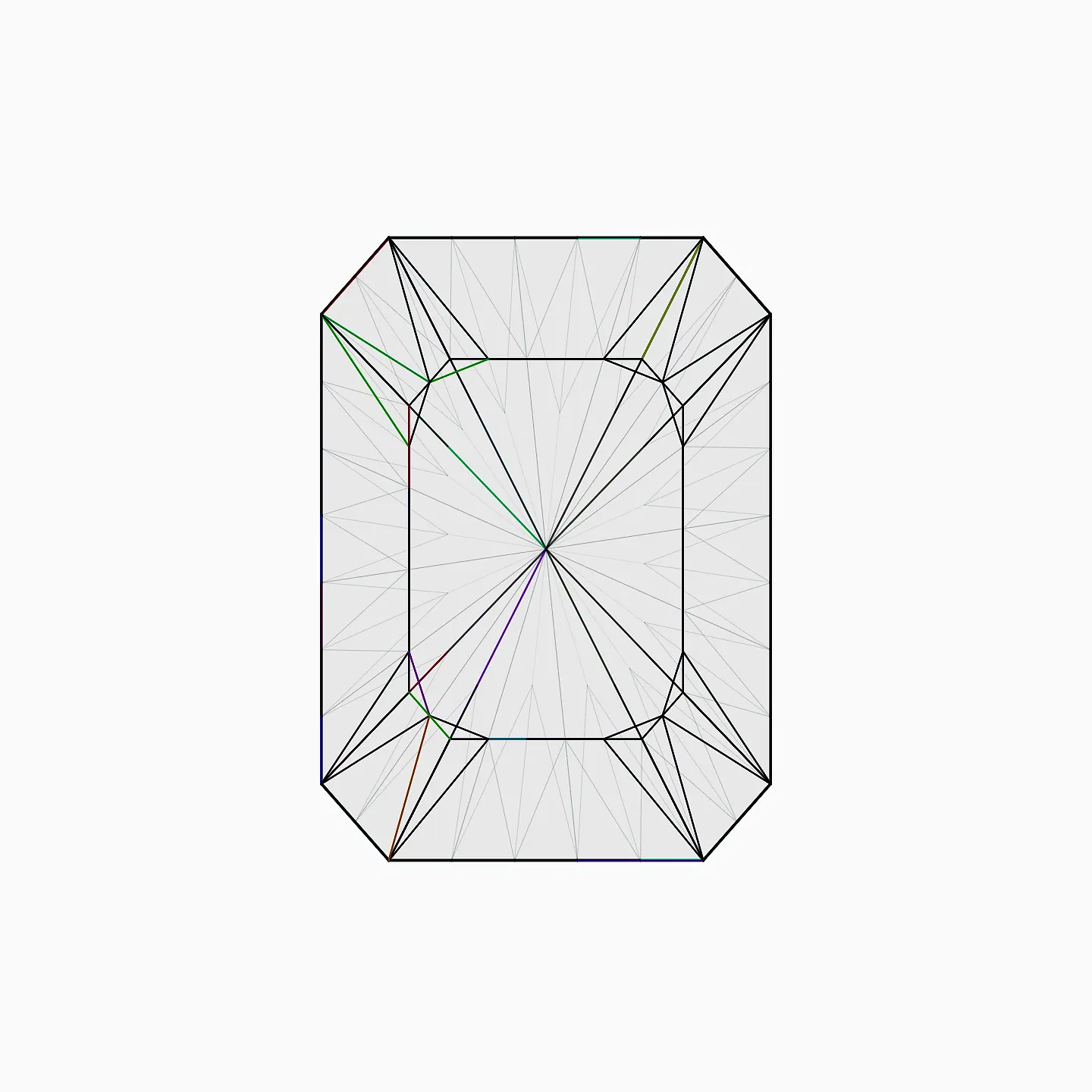
Light, returned
The finished stone, cleaned and ready for the laboratory. What it is graded at — colour, clarity, cut, carat — was largely settled by the plan made before the first cut.
Sourcing and ethics
The trade runs on documentation and on being straight about what you do not know. Ours is stated here rather than left to be assumed.
Where rough comes from
Natural rough is bought through established channels that operate under the Kimberley Process Certification Scheme, and every parcel carries the System of Warranties statement that accompanies it down the chain. We keep the paperwork for each purchase and can produce it on request.
Grown material
Grown stones are bought from producers who state their growth method and disclose origin on every report. Nothing grown is ever presented as natural, on this site or on an invoice, and the distinction appears on the certificate rather than only in conversation.
Disclosure
Treatments are disclosed. If a stone has been laser drilled, fracture filled, irradiated or HPHT processed for colour, it is stated plainly in writing before any money moves. Where we do not know something about a stone's history, we say that too.
Certification
Every stone we list is graded by a laboratory with no stake in the sale.
Independent grading
Stones are graded by an independent laboratory — most often GIA for natural goods and IGI for grown, though both grade both. We do not grade our own stock, and we do not ask a laboratory for a second opinion on a report we did not like.
What a report covers
Carat weight, colour, clarity, cut where the shape has a published cut standard, polish, symmetry, fluorescence, measurements, proportions and a plotted clarity diagram. For grown material it also states the growth method and any post-growth treatment.
Reading it properly
Two stones with identical grades can look quite different. Proportion figures, the plot and the stone in front of you tell you more than the four headline grades, and we will walk through all of it with you before you commit.
Frequently asked
The questions buyers ask most often before committing to a stone.
Do natural and lab-grown diamonds hold their value the same way?
No. Neither should be bought as a guaranteed store of value — a stone bought at retail usually resells for less than was paid. Natural diamonds have an established secondary market with trade buyers who will make an offer, typically well below retail. Production costs for grown diamonds have fallen steadily, retail prices have followed, and the resale market for them is thin. Buy a grown stone for what it is to wear rather than for what it might fetch later.
How does GIA grading differ from IGI grading?
Both are independent laboratories working to the same colour, clarity and carat scales. GIA, a non-profit founded in 1931, developed the grading system most of the trade uses and is the usual reference for natural stones. IGI, founded in Antwerp in 1975, grades a large share of the world's lab-grown diamonds. Wording differs in places — on round brilliants IGI may issue an "Ideal" cut grade, while GIA's highest is "Excellent" — and relative strictness is debated in the trade. For any single stone, the full report and the stone itself tell you more than the name at the top.
What is the difference between cut, polish and symmetry?
Cut is an overall grade of how the stone's proportions — table size, crown and pavilion angles, depth — work together to return light, and most laboratories issue it only for round brilliants. Polish describes the surface finish of the facets: fine polishing lines, burn marks or nicks. Symmetry describes how precisely the facets are shaped, aligned and placed relative to one another and to the outline. Fancy shapes carry polish and symmetry grades but no cut grade, so for them the proportion figures and seeing the stone matter more.
What does fluorescence on a report mean?
Some diamonds glow, usually blue, under ultraviolet light. Reports grade the strength of that glow from none to very strong, though the exact wording varies between laboratories. In the great majority of stones it has no visible effect in normal light; in a small number with strong fluorescence the stone can look slightly hazy. It is worth judging on the stone itself rather than ruling out a grade on paper.
Questions are welcome before, not after
If something about a report, a proportion figure or an origin statement is unclear, ask. We would rather spend an hour on it now than have you find out later.
Talk to us